What fits where, which way the light falls, and what the dimensions actually mean for daily life.
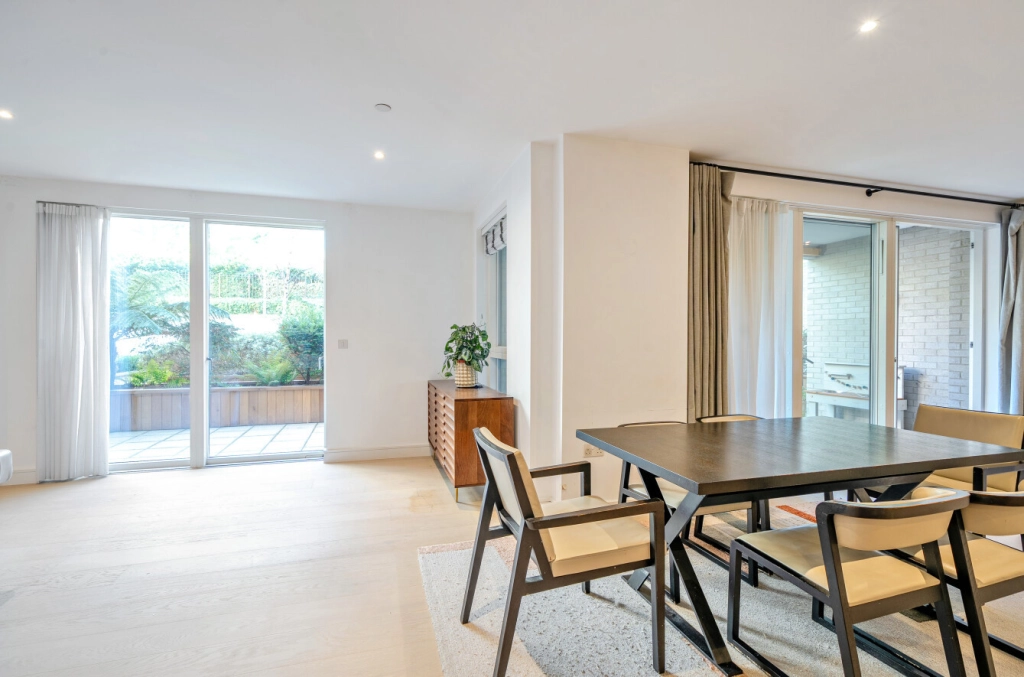
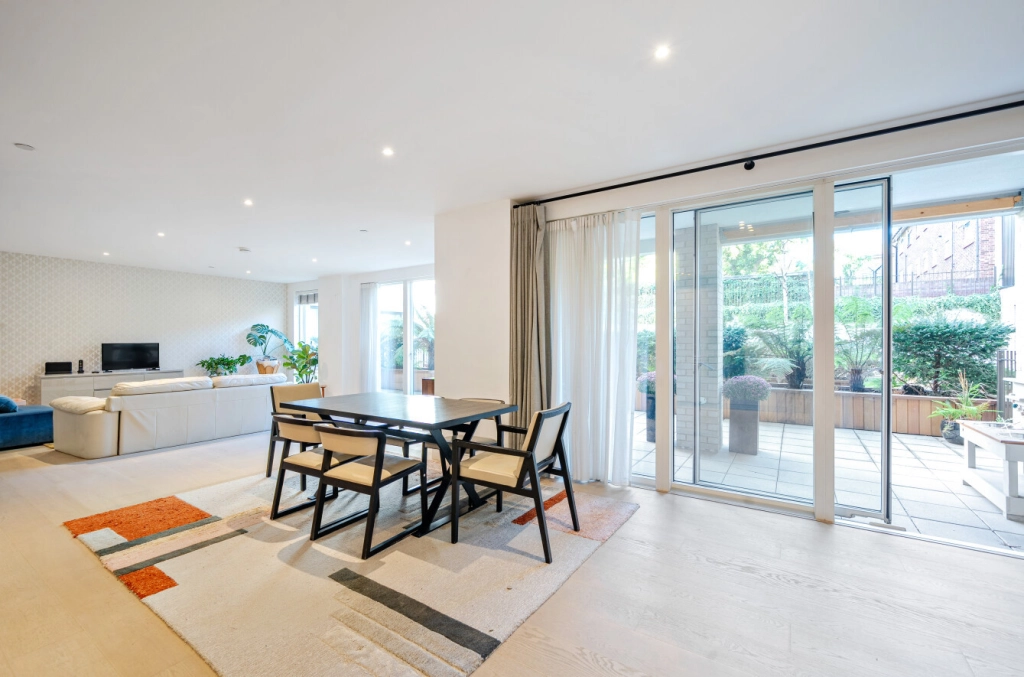
This single room is bigger than most Zone 1 studio flats. A six-seater dining table, a full sofa setup, and you still don't bang your shin walking between them.
At 40 feet, the room splits itself into zones without you trying. Kitchen end for morning coffee. Middle for dinner. Far end for the sofa, the television, the part of the evening where you stop moving. You don't plan it. It just happens.
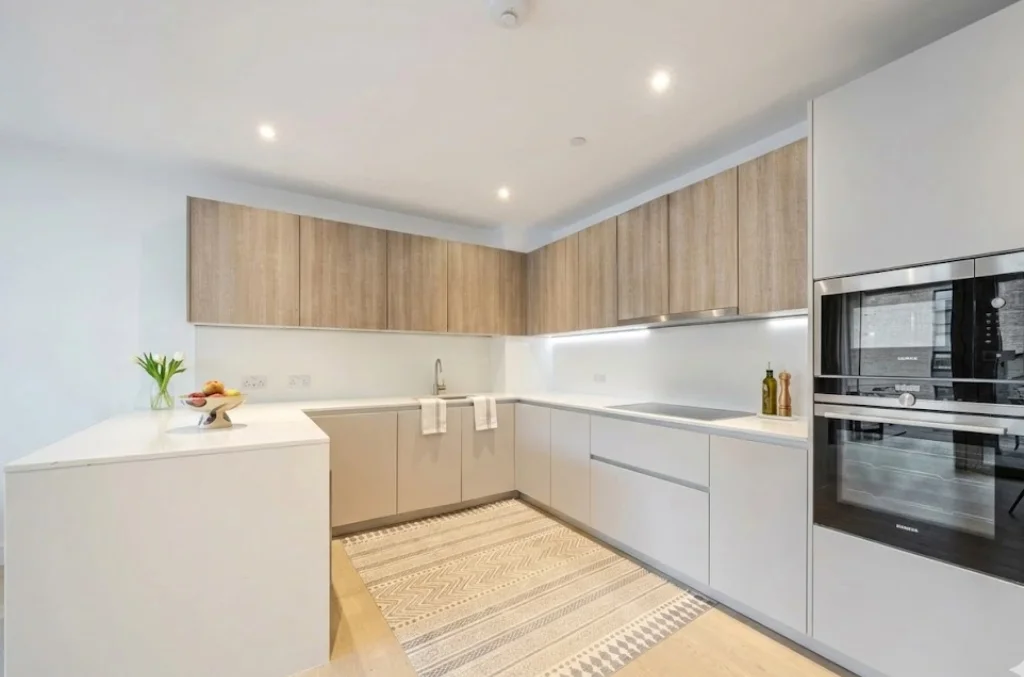
The kitchen faces into the room. You cook while the kids do homework, or while your friends talk, or while the football plays. You're not sealed in a separate box listening through plasterboard.
The terrace doors open flat from this room, so on any decent day the living space stretches well past 40 feet. Natural light reaches deep into the room. The threshold is flush — no step, no rail — so the boundary between indoors and outdoors genuinely disappears.
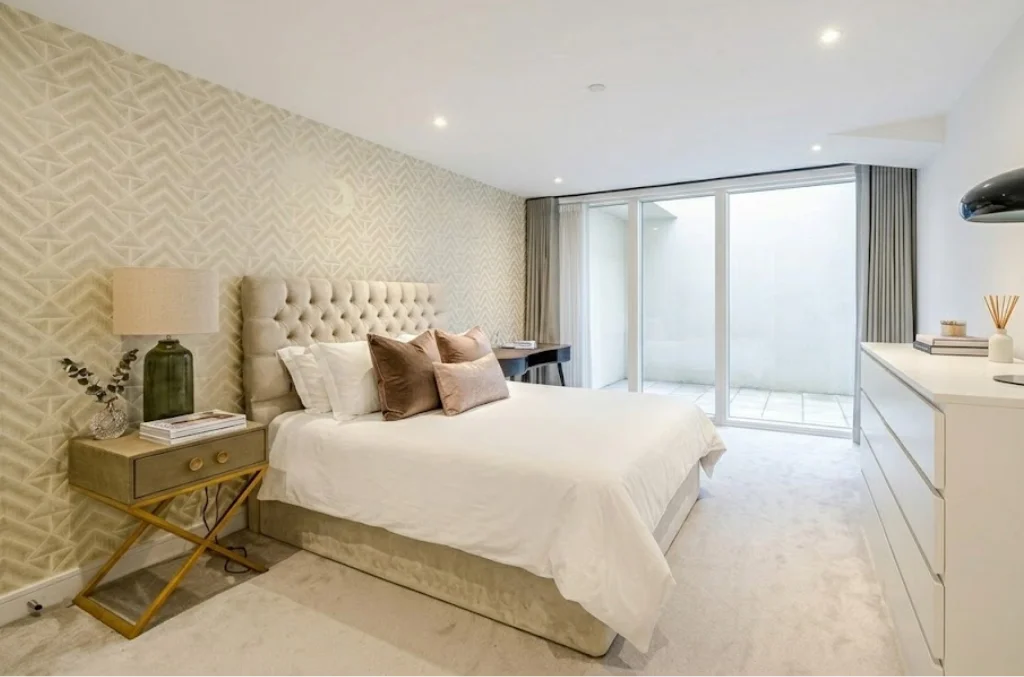
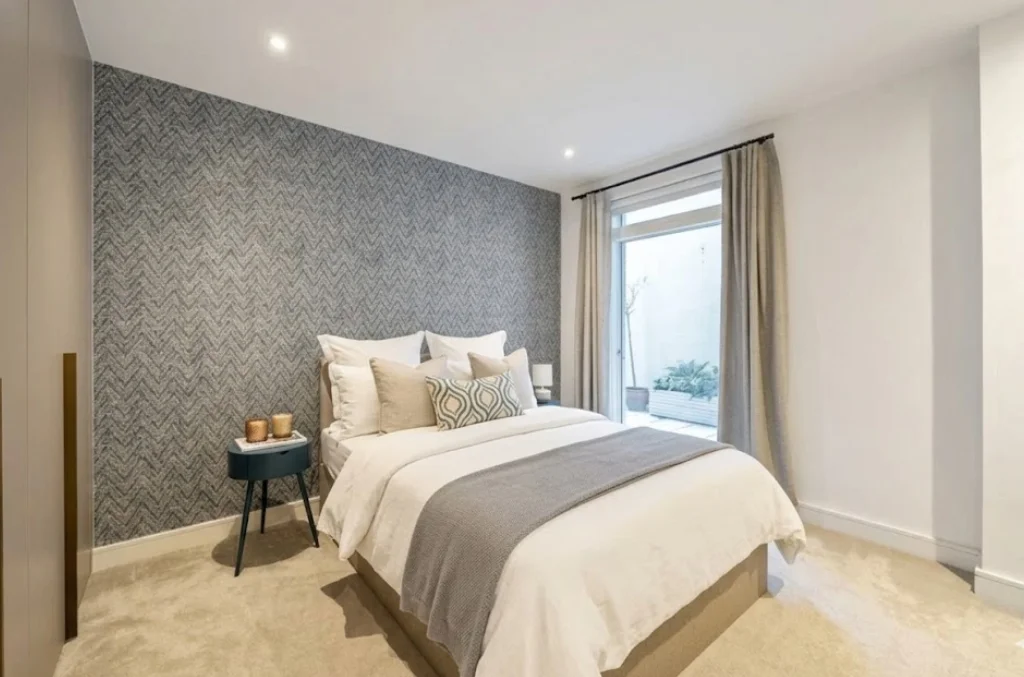
Two people can get out of bed on their own side without shuffling against the wall. That sounds like a low bar, but in London it isn't. This room clears it easily.
The en-suite is yours alone. Not down a corridor, not shared with guests. At 6:30am on a Tuesday, you walk through one door and you're in your own bathroom. No negotiating.
Terrace access runs straight from the bedroom. On a warm morning, you step outside with coffee before you've seen another person. On a summer evening, you come back in without passing through the kitchen or anyone else's TV session. Bedroom, bathroom, terrace. A private loop inside the larger apartment.
The built-in wardrobes were designed with the room, not added later. They sit flush with the walls and take full-width hangers. On moving day, you won't need a single freestanding wardrobe. That frees up roughly thirty square feet of floor you get to keep.
Most London second bedrooms are where the developer saved money. The bed fits if you don't also want bedside tables. The estate agent photographs from the doorway with a wide-angle lens because there's nowhere else to stand.
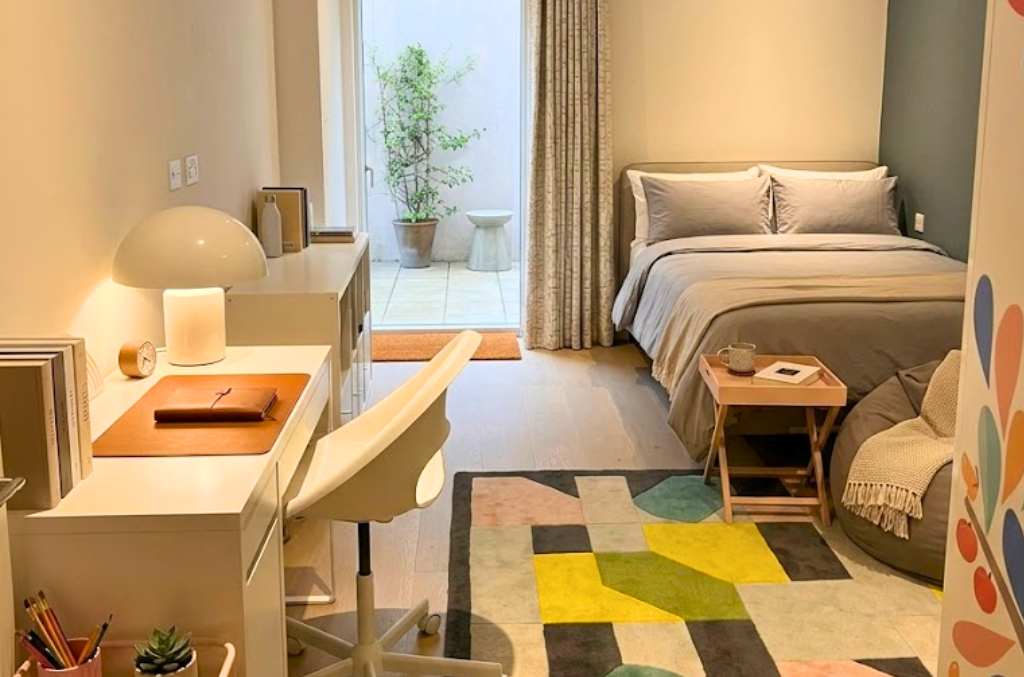
This is a genuine double with its own bathroom and its own terrace access. In London, second bedrooms with their own bathrooms are rare. Second bedrooms with terrace access are rarer. Whoever sleeps here (guest, child, flatmate) lives at the same standard as the person in the master. The only difference is room size, and that gap is smaller than you'd expect.
A couple with a child gets a kids' room that works properly. A couple working from home gets a real office that converts to a guest room by swapping a desk chair for a pillow. Two friends buying together get two actual suites instead of one good bedroom and one afterthought.
The own-bathroom detail matters at resale too. Two-bathroom flats already outperform one-bathroom flats in price per square foot across NW6. Three bathrooms puts this apartment in a bracket most purpose-built developments here don't reach.
The third bedroom tells you the truth about any apartment. If it's generous, the whole place was designed with care. If it's a cupboard with a window, you're looking at a two-bed in disguise.
This one takes a proper double bed with space on both sides. Not wedged against the wall. Not technically fitting if you remove the bedside tables. It has its own terrace access, same as the other two bedrooms. No odd one out.
The third bedroom decides how the apartment actually gets used. Two kids means nobody shares. A live-in relative gets independence. Working from home, you get a dedicated office and a guest room without converting the dining table every time someone visits.
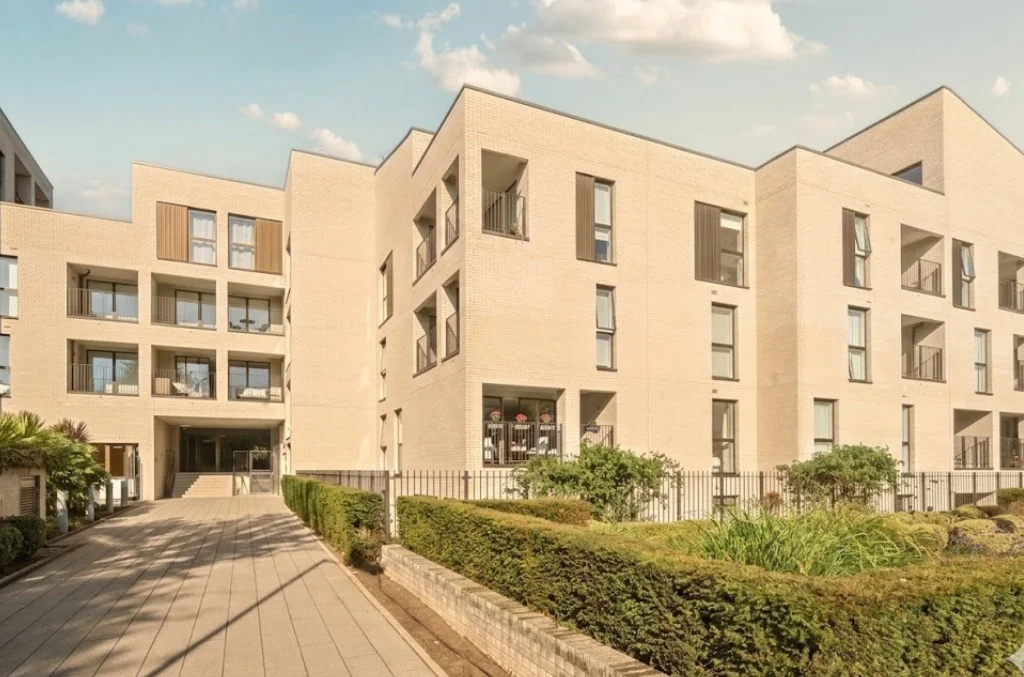
Three proper double bedrooms at ground floor in NW6, purpose-built, with concierge and parking. That doesn't come to market often. Most three-beds around here get their count by calling a single a double or a study a bedroom. When the third room is genuinely comfortable, the rest of the apartment was built the same way.
Three people. One bathroom. The morning becomes a scheduling problem. Someone's always waiting. The shower that should take ten minutes takes four because there's a queue. Three bathrooms ends that.
The master and second bedrooms each have their own en-suite, and your morning routine is nobody else's problem. The third bathroom is the apartment's family bathroom, separate from any bedroom. Guests use it without walking through someone's room. A child uses it independently. It's the bathroom that makes the apartment work as a home rather than just a collection of bedrooms.
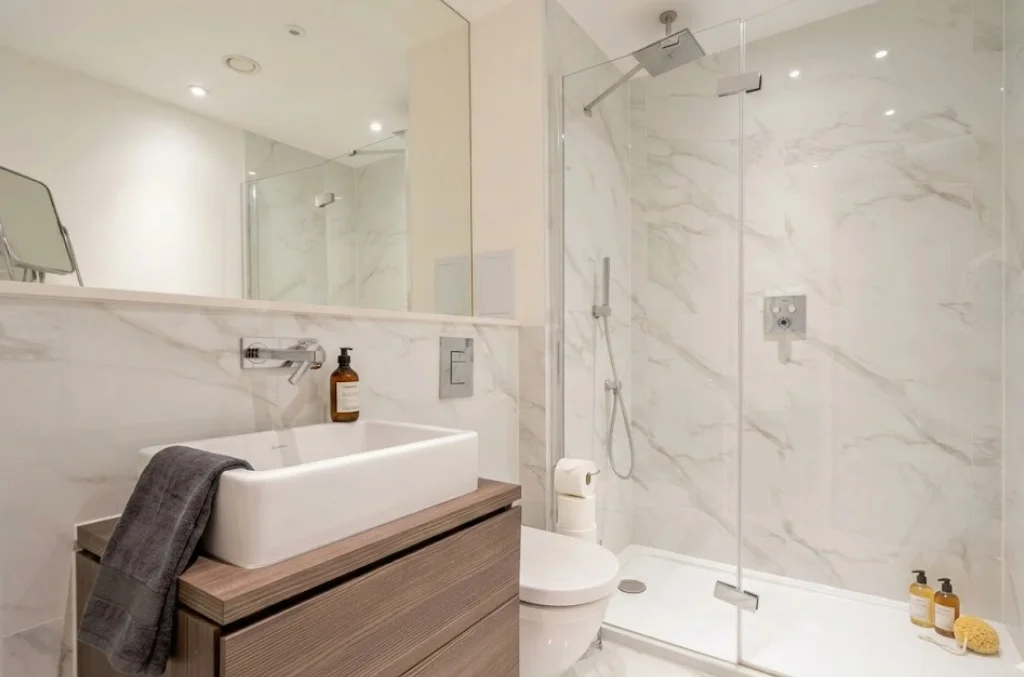
The finishes matter because bathrooms age faster than any other room. A dated kitchen still works. A tired bathroom makes the whole apartment feel tired. These are finished well: contemporary fittings, clean tiling, grouting that's actually done right.
Three bathrooms means three plumbing runs and three ventilation systems. In a Victorian conversion, that would worry you. In a purpose-built block where the plumbing was designed from scratch, it just works. Two showers running at once with no pressure drop.
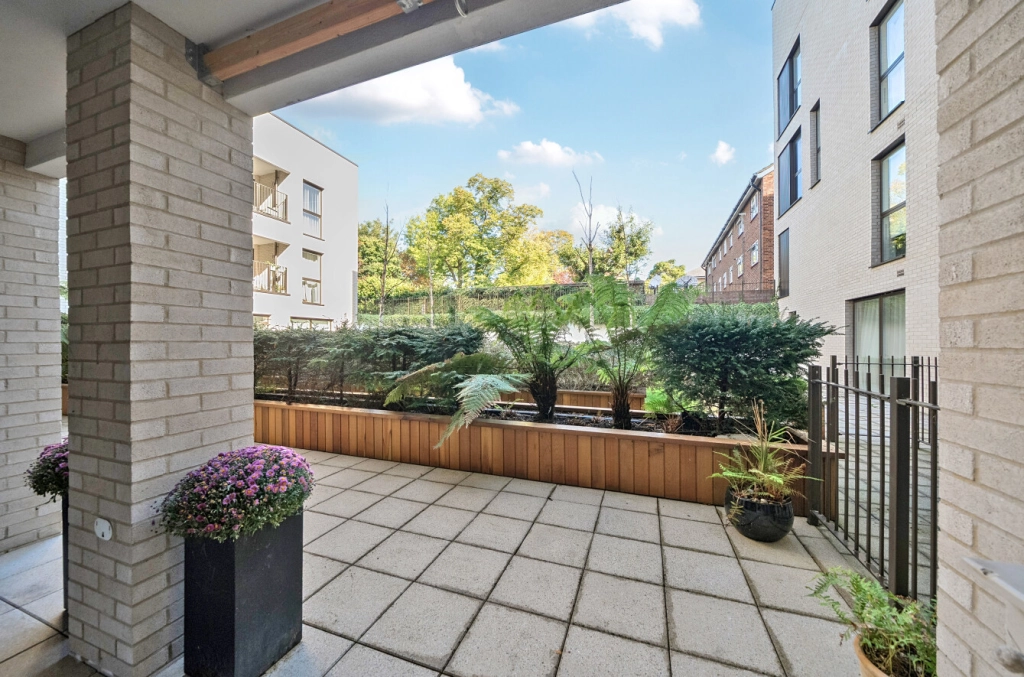
Most London “outdoor space” is a balcony. A ledge you stand on briefly before going back inside. You can't eat on it. You can't fit four people without someone blocking the door. Here, “terrace” means what it's supposed to mean: ground-level outdoor space you can actually furnish.
The main terrace extends from the reception room. A table and four chairs fit with room to push back and stand up. A lounger fits alongside. The threshold is flat, no step, so from April to October the terrace works as part of the living room. You leave the doors open on warm evenings and the boundary disappears.
The second terrace runs along the bedrooms and faces west. It catches afternoon and evening sun from around 2pm to sunset. In midsummer, that's roughly seven hours of direct light you can walk into from your bedroom. West-facing is what makes outdoor space in Britain usable — the sun hits when you're actually home. And if you want more green space, Queen's Park itself is a ten-minute walk.
Ground floor changes everything. No lift, no corridor, no shoes for the journey between your sofa and fresh air. You open a door and you're outside. Kids go in and out without worry. A cup of tea goes outside on impulse. That's the difference between a terrace you list on a brochure and one you use every day.
A CPZ permit in Brent doesn't guarantee you a space. It gives you the right to compete for one. At 9pm on a wet Thursday, every spot within 400 metres is taken. An allocated underground space ends that. It's always there. You drive in, park, go upstairs. (More on parking in Queen's Park.)
Underground means your car isn't baking in summer, frosted in winter, or collecting tickets because you forgot which side of the street is active on alternate Wednesdays. It's access-controlled and out of sight. Insurance premiums for secure underground parking run measurably lower than on-street, and that tells you what insurers know about the risk.
The EV charging point is already installed. Not “EV ready,” which means they ran a conduit and left you to spend four thousand pounds finishing the job. Not “EV capable,” which means even less. Installed, wired, functional. You plug in and it charges. In a leasehold block, getting a charger approved after the fact can take the better part of a year. This one's done.
Allocated parking spaces in this part of NW6 sell separately for between forty and sixty thousand pounds when they come up, which is rare. This one is included. The EV charger, which would cost two to five thousand pounds to retrofit (assuming you could get permission), is also included. Factor both into the price, and the per-square-foot cost of the living space itself drops meaningfully.
Full specification, floor plan with dimensions, and cost breakdown: complete property details →