A street-by-street guide. Because 200 metres is the difference between a premium and a bargain.
Choose the Street, Not Just the Area
Most buyers pick an area, scroll Rightmove, book a few viewings, and choose the best flat they can afford. But in Queen's Park, two properties 200 metres apart, identical in size, condition, and layout, can differ in price by 15% purely because of the road. On a £1.3 million flat, that's nearly £200,000.
A wide, tree-lined road with well-maintained front gardens feels different from a narrow, traffic-choked road with wheelie bins on the pavement. Both might be equidistant from the Tube. Both might be in the same council tax band. But one makes you feel like you've arrived, and the other makes you feel like you've settled.
This guide names the best roads in Queen's Park London, the value roads, and what separates one from the other. If you're looking for where to buy in Queen's Park, the street is where to start.
The Premium Streets
Demand outstrips supply on these roads. Properties sell within days. Price per square foot runs 10–20% above the Queen's Park average.
Keslake Road
Wide, tree-lined, full of families. The default answer when someone asks for the best roads Queen's Park has to offer, and the default is right. The width gives it light and openness the narrower Victorian terraces can't match. Three minutes to the park without fronting a busy road.
Typically families upgrading from Maida Vale or Kensal Rise. Houses regularly trade above £2 million.
- Premium: 15–18% above Queen's Park average
- Profile: Most sought-after street in the area
Kempe Road
The Victorian terraces here are in notably good condition. Residents invest in their properties, creating a cycle of maintenance and rising value. Close to the park, close to Salusbury Road's cafes and restaurants.
Couples in their late thirties who want period character without a renovation project.
- Premium: 12–15% above Queen's Park average
- Profile: Period character, well-maintained
Mortimer Road
Quieter than Keslake, less trafficked than Kempe. Close to Malorees Junior School. Nothing much happens here, which in property terms is a good thing. One of the quietest roads in the Queen's Park conservation area.
- Premium: 10–12% above Queen's Park average
- Profile: Quiet, family-oriented
Milman Road
A mix of period houses and converted flats gives it a broader price range than the other premium streets. You can buy a two-bedroom flat here for significantly less than a house on Keslake, while still getting the tree cover and neighbourhood character.
- Premium: 8–10% above Queen's Park average (flats)
- Profile: Best entry point to the premium streets
The Value Streets
These roads sit 10–20% below the premium streets, but not because anything is wrong with them. They just don't have the name recognition.
Kilburn Lane (North End)
The name puts people off. But the north end, above Cambridge Avenue, is functionally part of Queen's Park. Seven minutes to Salusbury Road, eight to the park. Busier, yes. But you're paying 15–20% less per square foot for everything that makes the area worth buying into.
The buyer here runs the numbers and realises the saving buys them an extra bedroom.
- Discount: 15–20% below premium streets
Harvist Road
Sits at the boundary between Queen's Park and Kensal Rise. A decade ago it would have been priced as Kensal Rise. Today the Queen's Park effect is creeping north. New cafes, refurbished properties, the general pull of a rising area. The gap narrows year on year.
For the last five years, buying here has paid off.
- Discount: 12–15% below premium streets
The Avenue NW6
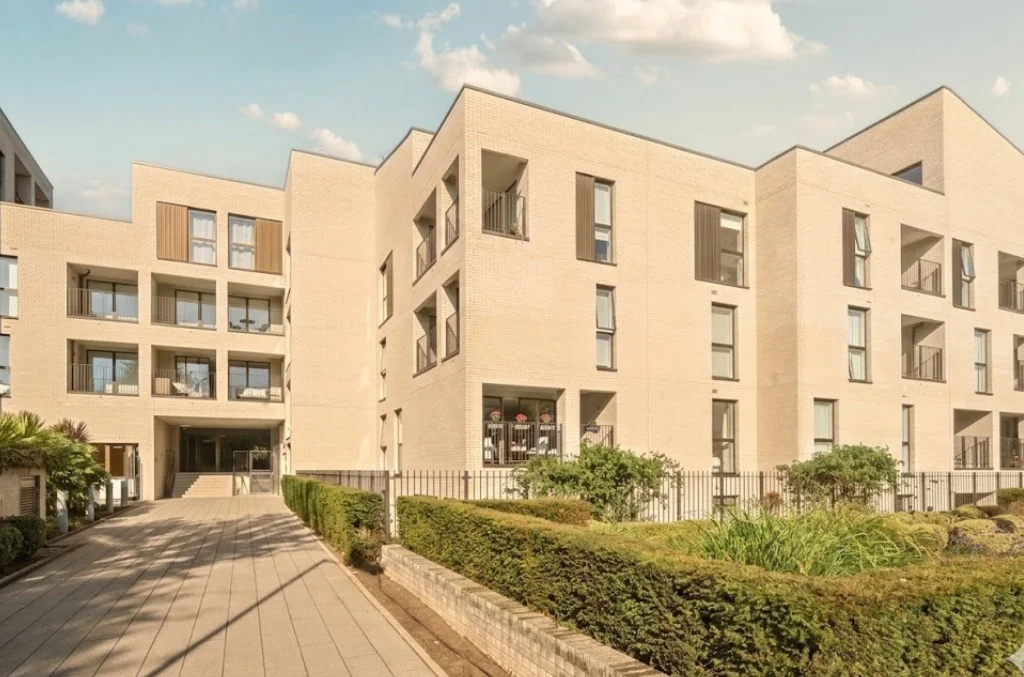
One of the widest residential streets in the area: purpose-built mansion blocks, not converted Victorian houses. Allocated parking. Genuinely low traffic — it doesn't connect any two places cars need to travel between, so nobody uses it as a rat run. Five minutes from Paddington Rec, four minutes from Brondesbury Park station.
That park distance is why The Avenue prices below the premium streets. But think about what you get for that discount. Width. Silence. Parking. Purpose-built proportions with proper room sizes. Ground-floor access to a private terrace. The kind of space that can't exist on the narrower roads closer to the park.
You sacrifice a few minutes of park proximity and gain everything else.
- Discount: 10–15% below premium streets
- This property: 1,753 sq ft on the ground floor
What Actually Makes a Street Premium
Most buyers can feel the difference between a good street and a mediocre one. Few can say why. Here's what actually drives street-level pricing in Queen's Park.
Width
More natural light at ground and first-floor level, less noise bouncing between buildings, and the feeling of space when you step outside. The widest streets (Keslake, Harvist, The Avenue) consistently outperform their narrower neighbours.
Tree Canopy
Mature trees add between 5% and 15% to residential values. They reduce noise, filter air, moderate temperature, and signal that a street is established and looked after. The best streets are the most heavily treed.
Through-Traffic
Streets that don't work as through-routes command a premium. Cars that don't need to be there aren't. No rat runs at 8:30am. The quietest roads are the ones that lead nowhere useful for a driver in a hurry.
Distance from Noise
The first 50 metres from a busy road account for the biggest drop in perceived noise. Properties 100 metres or more from the nearest main road exist in a different acoustic world.
Housing Stock Consistency
Streets with a single dwelling type price more predictably than mixed streets. A mixed street isn't worse, but it's harder to value, and uncertainty depresses prices. Keslake and Kempe benefit from this: mostly houses, mostly in good repair, mostly families.
The Avenue, NW6: What You Gain and What You Trade
We have a property on The Avenue. We think it's worth seeing. But we're not going to pretend it's something it isn't.
What The Avenue Does Well
- One of the widest residential streets in NW6. Measurably wider than Keslake, Kempe, or Mortimer Road.
- Traffic is genuinely low. The Avenue NW6 doesn't connect two busy roads. At 10pm on a weeknight, you could stand in the middle of the road for several minutes without inconveniencing anyone.
- Purpose-built mansion blocks — 1,753 sq ft on the ground floor. That footprint doesn't exist in a Victorian conversion on the narrower streets near the park.
- Allocated parking. In NW6.
- Five minutes to Paddington Recreation Ground: tennis courts, running track, green space that is never overcrowded on a Saturday afternoon.
- Four minutes to Brondesbury Park station (London Overground), with direct connections to Stratford, Highbury & Islington, and the City.
What You Trade
- Queen's Park Gardens is a 10–12 minute walk. From the premium streets, it's 3–5 minutes. If the park is part of your daily routine, this matters.
- Salusbury Road (the cafes, the restaurants, the Sunday farmers' market) is about 12 minutes on foot. Not prohibitive, but not spontaneous either.
- Queen's Park station (Bakerloo line) is further than from the premium streets. If the Bakerloo is your commute, this is a real factor. If you use the Overground or drive, it's irrelevant.
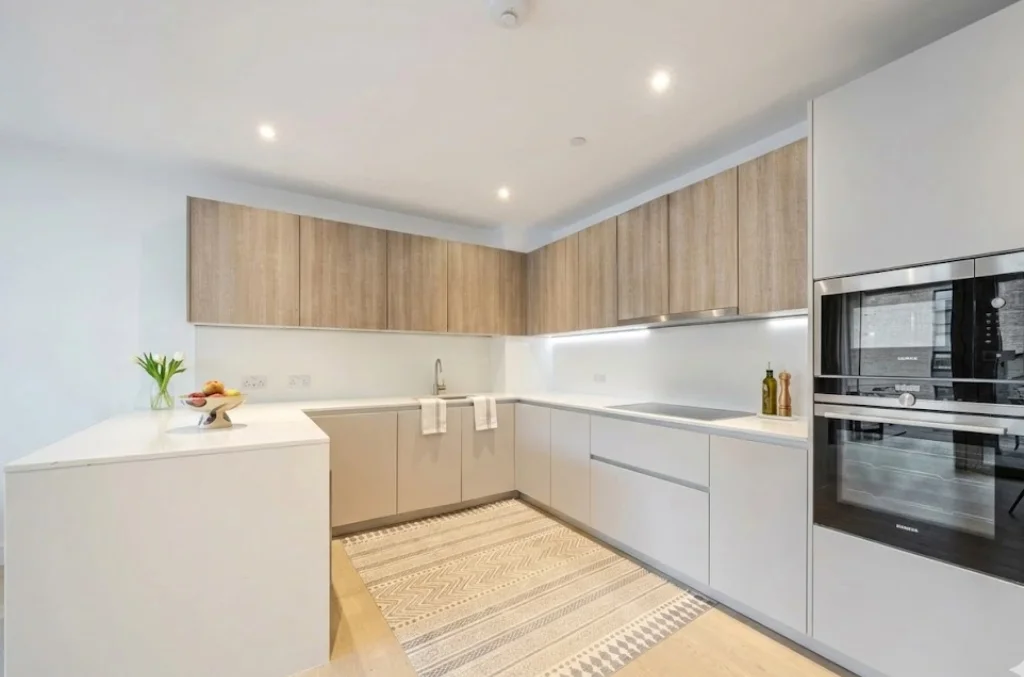
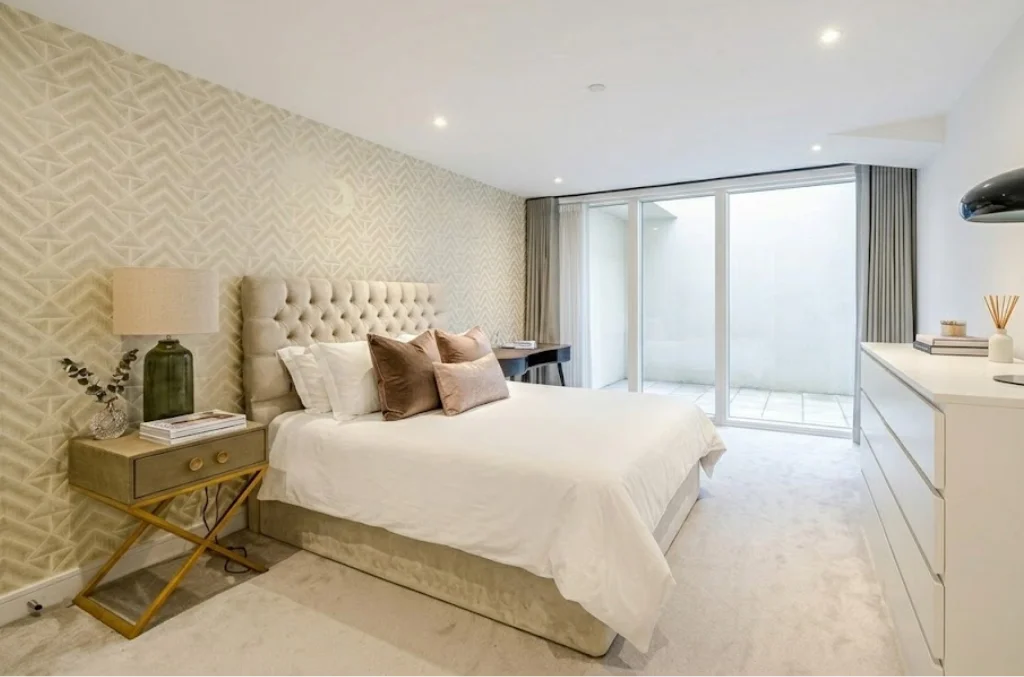
The honest pitch: you're trading park proximity for street quality. Width, quiet, parking, and a ground-floor apartment with two private terraces. Space that doesn't exist on the narrower Victorian streets closer to the park. For some buyers, that's the wrong trade. For others, it's exactly right. Come see it and decide.
How to Choose Your Street
Visit three times. Come at 8am on a weekday and watch the school run. How many cars? How fast? Is your prospective street a cut-through or a destination? Come at 6pm and listen. Traffic hum? The Bakerloo line? Nothing? Then come on a Sunday. Sunday is when residents are actually present, walking dogs, washing cars, talking to neighbours. Sunday tells you who lives here.
Walk the routes. Stand at the front door. Walk to the station. Walk to the park. Walk to Salusbury Road. Time every journey. A ten-minute walk along a tree-lined residential street feels like five. A seven-minute walk along a busy main road feels like twelve. Google Maps won't tell you that. Your feet will.
Talk to the neighbours. Knock on a door. This feels awkward, which is why almost nobody does it. The person who has lived on a street for eight years knows about the party flat on the second floor, the parking wars, whether the council actually collects the recycling on time. You can't buy that information. You can only ask for it.
Choose the street first. Then wait for the right property.